Reunited animals · 7 November 2026
The Yellowstone search that worked only when people stopped chasing
A frightened dog can hear her name and still run. Luna's recovery shows why good intentions must give way to observed behaviour, one reporting channel and a patient plan.
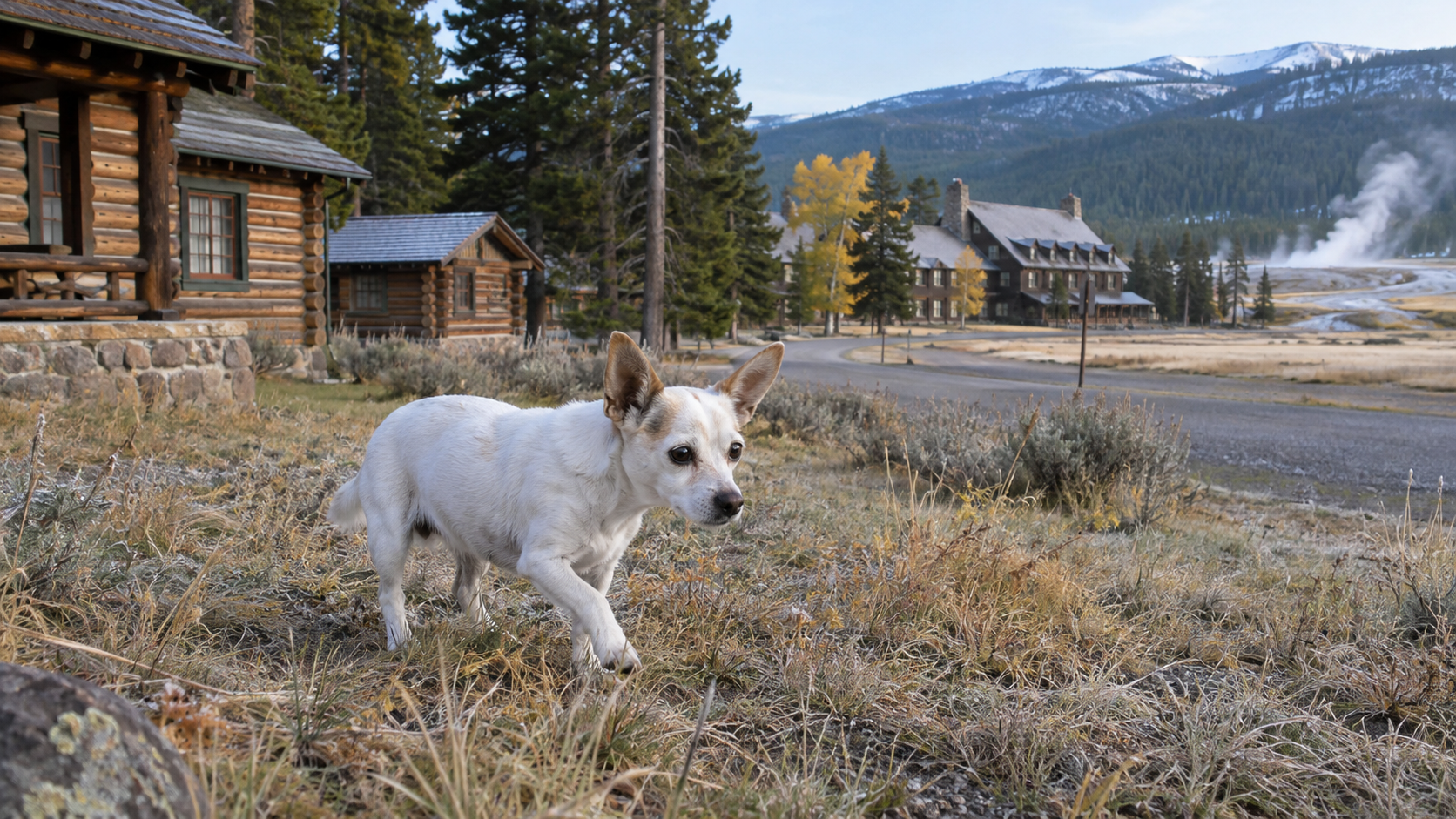
The instruction on the posters sounded almost unfriendly: do not chase. For a lost dog seen after weeks in the open, people naturally want to call, crouch down and close the distance. Luna's rescuers needed visitors and workers at Yellowstone National Park to do the opposite. The ten-year-old Jack Russell and Chihuahua mix had shifted into prolonged flight behaviour. Each person who followed her could turn a useful sighting into another retreat through a park covering roughly 3,500 square miles.
Luna escaped on 10 September 2026 while her California family was away from its cabin. They had left a Do Not Disturb sign on the door. According to search leader Katie Boucher's account to the Associated Press, a housekeeping worker apparently opened the room and Luna got out. Staff then chased her around the area for more than two hours before the owners returned. That sequence is the search team's account, not an independently adjudicated finding about responsibility, and it should be described with that limit intact.
The family searched before having to leave the park. They were told Luna might already have died, possibly taken by a coyote. It was a plausible fear in a landscape shared with coyotes, bears and wolves, but it was not evidence. Days later, reports showed she was still alive. That distinction is central to any missing-animal operation: the worst possible outcome must be planned for, but it must not be promoted to fact while verified observations point elsewhere.
Luna became visible in surprisingly human places. Witnesses saw her cross junctions, move through employee housing and enter lodges through automatic doors. Boucher believed the pattern showed Luna retracing parts of her family's previous day, approaching places they had visited together. No one can ask a dog what she remembers, so this remains an interpretation. Still, plotting time, place and direction gave rescuers something better than a collection of emotional phone calls: it gave them a working area and a repeatable pattern.
The public response was both essential and difficult. Marie Jaskula, a local resident who runs one of the park's general stores, put notices at every entrance. Tourists and seasonal workers supplied eyes across a huge territory. Yet some called Luna's name or pursued her after spotting her. As Jaskula stressed, the instinct to help can trigger the dog's fight-or-flight response. A pet who comes when called in a kitchen may behave like a wary free-ranging animal after weeks of stress.
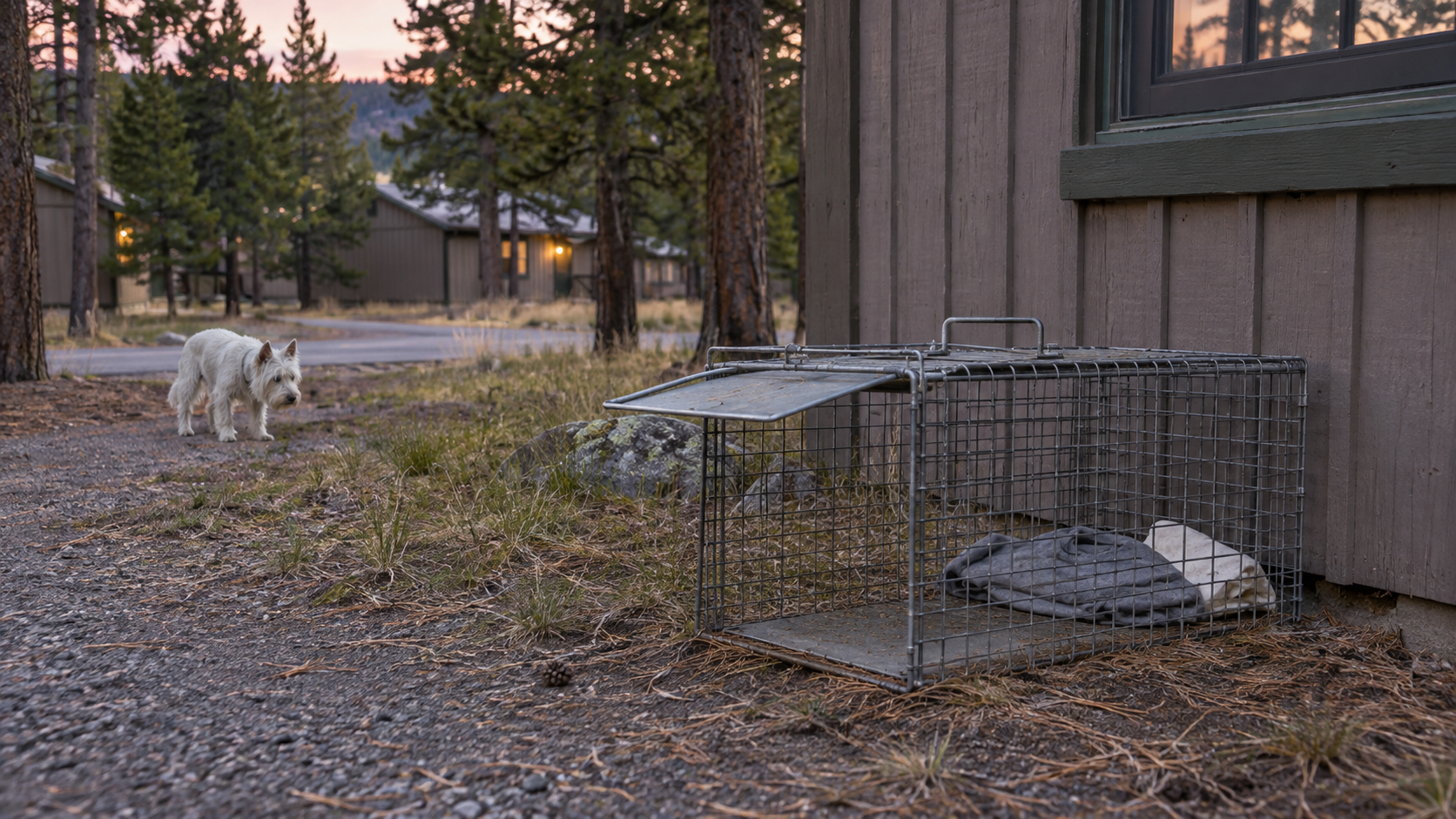
The recovery plan had to fit Yellowstone rather than a suburban neighbourhood. Volunteers set a humane live trap with scraps from a T-shirt and pillowcase belonging to Luna's family. They avoided food bait because it could attract wild animals. Familiar scent offered a reason to investigate without creating a feeding station for bears or other wildlife. On 14 October, Boucher and one of Luna's owners found her inside the trap and took her directly to a veterinarian.
Luna was underweight, but alert and in good spirits, Boucher said after the examination. The reunion came after 34 days and close to an operational deadline. Boucher had been sleeping at an RV area for seasonal employees that was about to close, and she said this would have been her final week searching. Winter was drawing nearer. The successful morning can look lucky from a distance, but it rested on weeks of reporting, poster distribution, pattern analysis and a controlled capture method.
There is a prevention lesson here too. A Do Not Disturb sign communicates a request; it does not physically contain an animal. In a hotel, cabin or rental, owners can tell reception that a pet is inside, use any available room-status procedure and add a suitable internal barrier. Depending on the dog, that might be a secured travel crate, a portable pen or separation behind another closed interior door. The arrangement must be safe and familiar, never improvised in a way that creates panic or overheating.
For search teams, Luna's case is a reminder to centralise information. A single coordinator can distinguish a fresh observation from a repeated rumour, mark direction of travel and tell the public what not to do. Publicity without instructions may simply produce more chasing. Instructions without enough reach may produce silence. The posters at Yellowstone did both jobs: they made Luna recognisable and told potential witnesses that restraint was part of the rescue.
LollyMap treats a reunion as evidence about a process, not just an ending. Luna survived, but survival alone did not bring her home. People noticed her, passed on sightings, stopped treating pursuit as help and used scent in a way suited to local wildlife. A humane trap converted proximity into safety. The strongest lesson is uncomfortable because it asks humans to resist action: sometimes the fastest route back to a frightened dog begins by standing still.
Case sources
- Associated Press — Luna, a small dog missing for over a month in Yellowstone, is reunited with her owners
- KSL — Luna, a small dog missing for over a month in Yellowstone, is reunited with her owners
Original LollyMap reporting based on the sources listed. The cabin-door sequence and behavioural interpretation are attributed to the search leader quoted in those reports.