Reunited animals · 8 November 2026
The missing-cat search was local. Galena was already crossing two states in a box
Her family checked roads and gardens while the real lead moved through a delivery network. The case changes what “search the house again” should mean.
For a week, the Clark family searched in the right places for an ordinary disappearance. They checked their Lehi, Utah, home repeatedly, looked through the neighbourhood and nearby communities, involved relatives and posted notices. Galena was an indoor cat, so every route out of the building mattered. Yet the decisive route was not a door or window. By the time the family realised she was missing, a large returns parcel had begun moving toward a warehouse near Riverside, California.
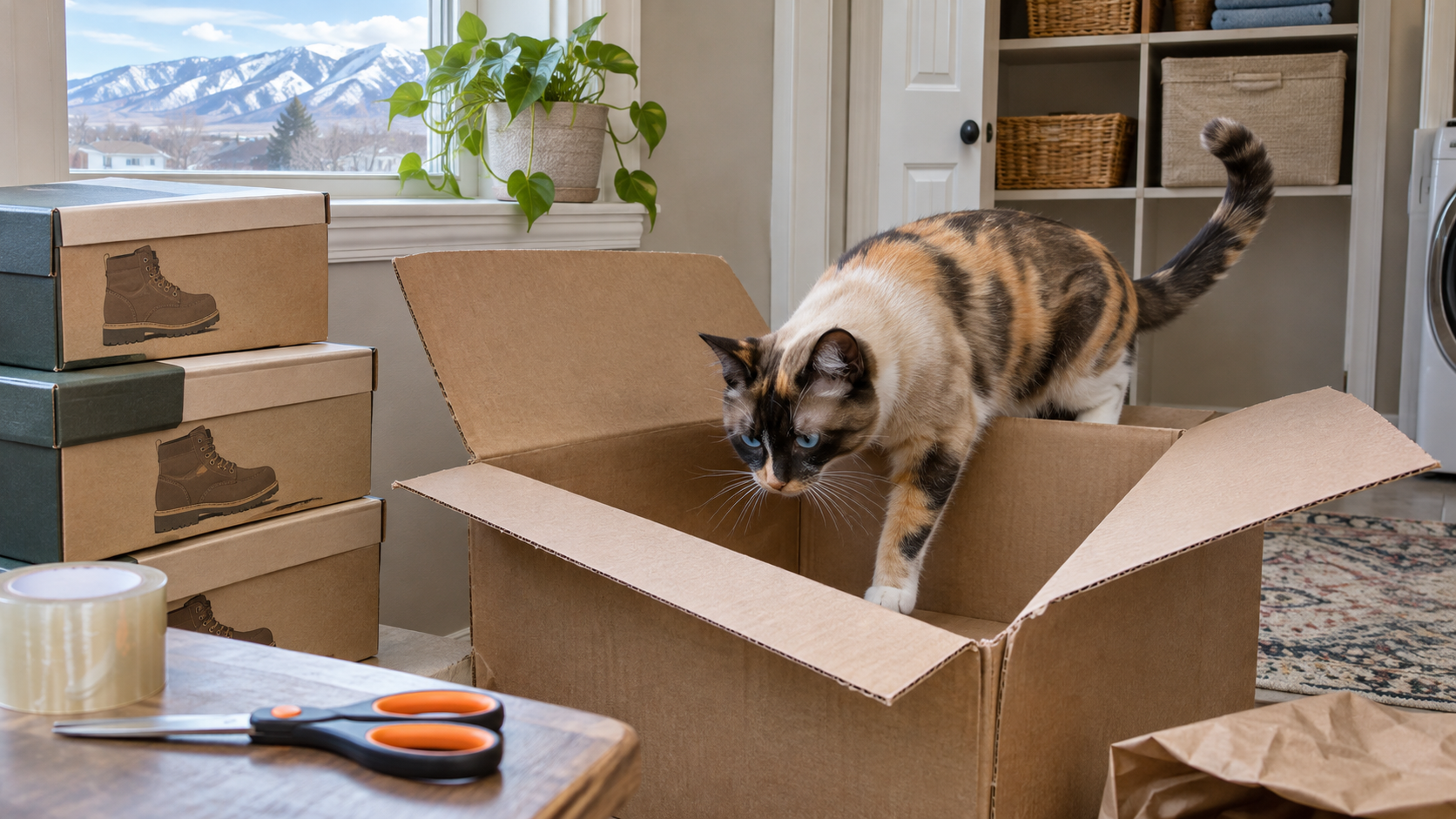
Galena was six years old and known for slipping into cardboard boxes. On 10 April 2024, Matt Clark packed five pairs of steel-toed work boots for return. The family's best reconstruction is that Galena jumped into the larger shipping box when he stepped away for scissors and tape. Nobody witnessed that instant, and responsible retelling should keep the inference visible. The box was sealed, taken to a shipping outlet and sent roughly 630 miles away.
The cat's quiet nature made the mistake harder to detect. Galena did not produce a cry that reached the people handling the parcel. She spent about six days without food or water. A seam in the cardboard came apart enough to allow airflow, and the weather was not severe. Those factors may explain survival, but they are luck rather than safety features. A parcel can be stacked, heated, delayed or compressed; the same sequence could easily end before anyone opens it.
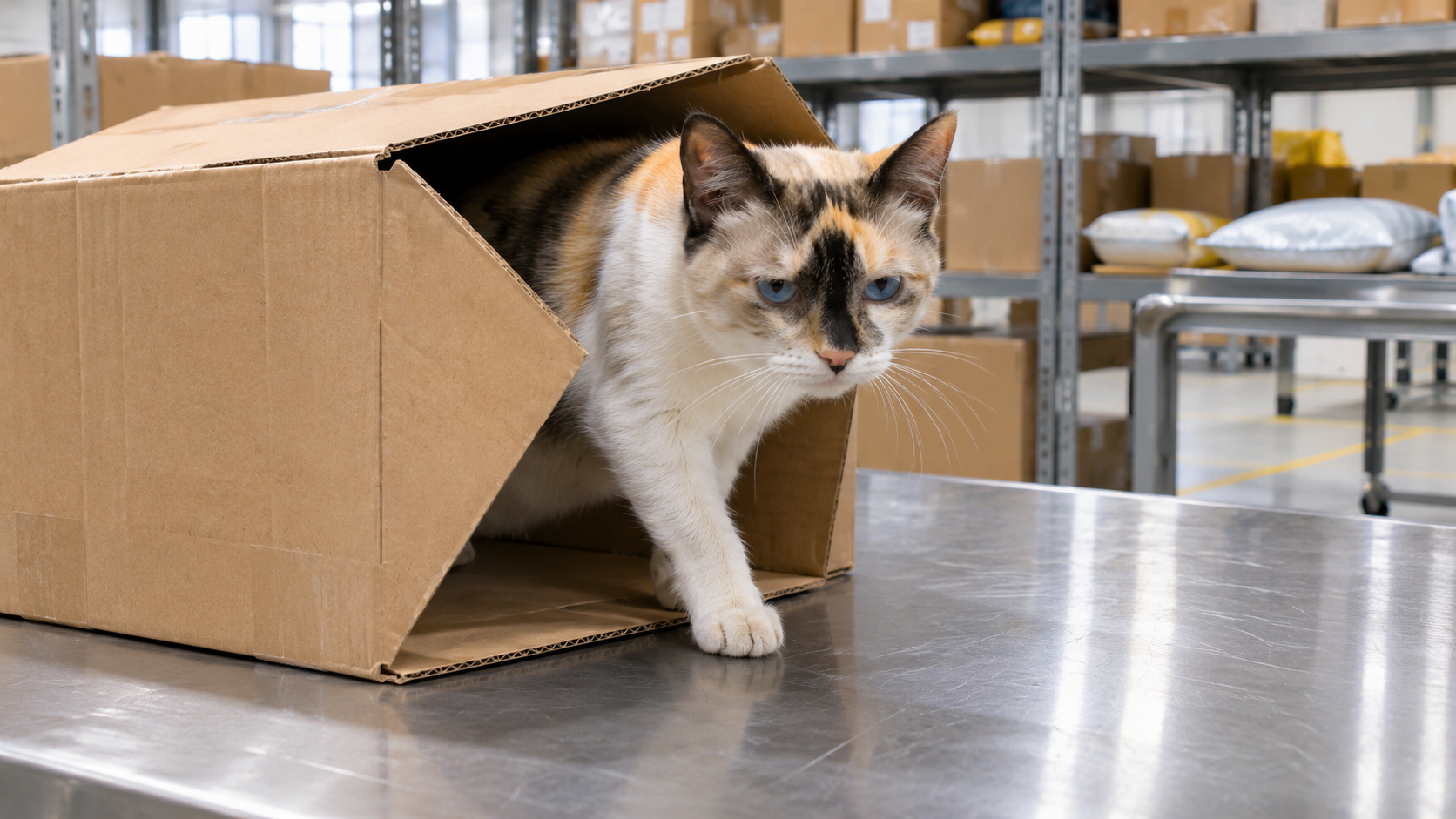
Workers at the returns facility eventually discovered a living cat beside the boot boxes. They contacted Brandy Hunter, a colleague experienced in cat rescue. Hunter secured Galena and brought her to a veterinarian the following day. That decision deserves more attention than the novelty of the journey. A found animal hundreds of miles from home needs medical assessment and identity checks, not an improvised adoption or a social-media handover based only on resemblance.
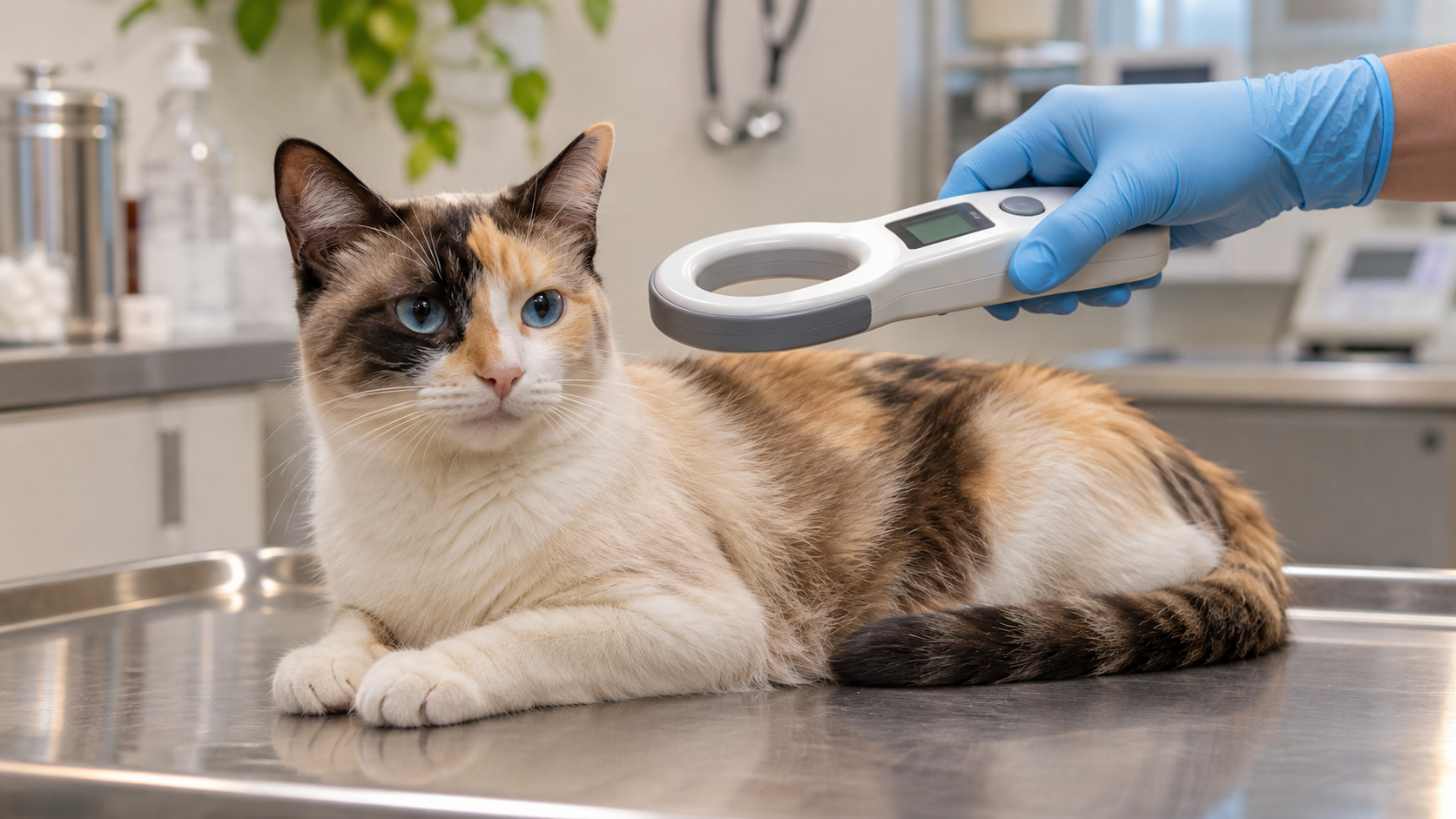
On 17 April, Carrie Clark received notice that Galena's microchip had been scanned. A later call placed the cat in California. The chip had not tracked the package and could not warn the family during transit. Its value arrived at the point of contact: the veterinarian read a permanent identifier, the registry connected it to the Clarks, and current details made the connection usable. Technology solved one narrow problem extremely well.
The couple flew to California the next day and met Galena at the veterinary office. They then rented a car for the journey home. Reports described the cat as hungry and dehydrated but without serious lasting injury. That healthy outcome should not soften the risk. Six days in packaging without routine care is an emergency even when the animal walks out. Immediate veterinary evaluation was appropriate because dehydration and other effects may not be obvious from a cat's first movements.
Galena's case expands the standard indoor-cat search. If there is no clear escape point, list everything that physically left the property around the time of disappearance: parcels, rubbish, donated furniture, work vehicles, moving vans and visitors' cars. Check doorbell footage if available and contact the relevant carrier or facility quickly. This is not permission to chase fanciful theories. It is a structured review of movements that can be verified.
Prevention is simpler. Keep pets out of the room while packing large boxes, especially when the task involves repeated trips for tape or tools. Inspect an empty box, inspect it again immediately before closing and account for the animal before the parcel leaves. Weighing may add another warning, although a cat's weight can disappear among heavy goods, as it apparently did beside multiple work boots.
The search also shows why a microchip record is not a one-time administrative task. Phone numbers, email addresses and home details change. A successful scan followed by obsolete information produces a new dead end. Owners should review registry details after moving and at regular intervals. Finders should know that a collarless cat may still have an owner waiting far beyond the local lost-pet groups.
LollyMap examines reunions as systems with several chances to fail or recover. One check failed before the box was sealed. Later checks worked: warehouse staff recognised the emergency, a rescuer protected the cat, a veterinarian scanned her and a registry pointed to reachable people. Expertise is not the promise that mistakes never happen. It is the habit of placing reliable checks at every stage where a mistake can still be reversed.
Case sources
- Associated Press — Utah cat with a fondness for cardboard takes surprise trip to California in an Amazon box
- KSL — Utahns reunited with pet cat they accidentally shipped with Amazon return
Original LollyMap article based on the sources listed. Galena's entry into the parcel was not witnessed and remains the family's reconstruction.