Lost and found animal stories · 12 November 2026
Aggie survived the fire. A shelter scan completed the rescue
Finding a weak cat near a burned neighbourhood was only the first step. The microchip connected her to an evacuated family, and veterinary care came before going home.
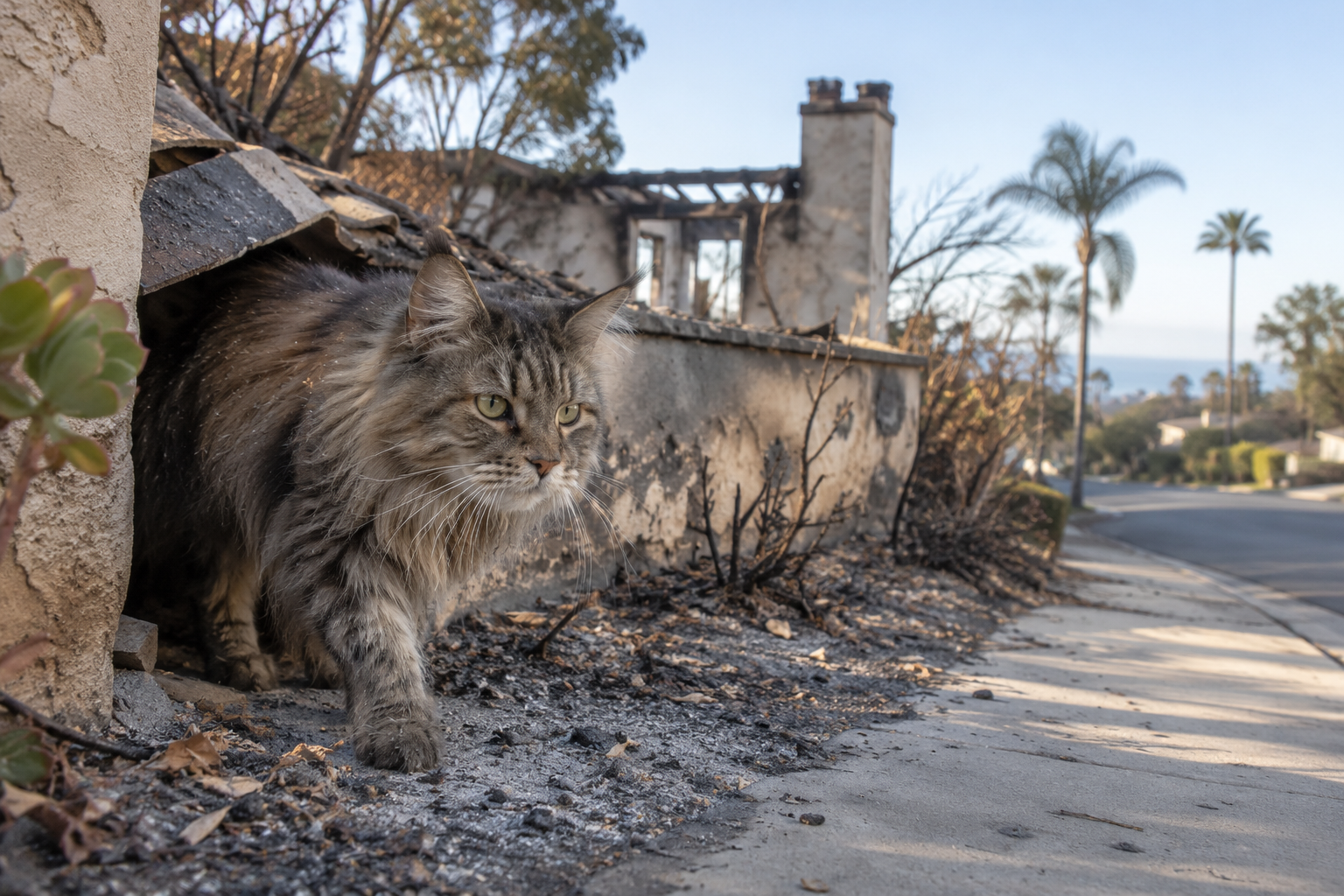
On 7 January 2025, Katherine Kiefer was away at a medical appointment when fire reached her Pacific Palisades neighbourhood. Her children tried to evacuate Aggie, but the five-year-old Maine coon was a practiced hider and they could not find her. The house burned. For the next two months, the family had no reliable account of whether the cat had escaped, sheltered nearby or died. A disaster search begins with this uncomfortable limit: love and effort do not create knowledge where no one saw what happened.
An animal control officer found a severely weakened cat near Bestor Boulevard on 7 March, exactly two months after the fire began. West Los Angeles Animal Shelter took her in and scanned her microchip. The number led back to Katherine. On 8 March, owner and cat met again at the veterinary hospital treating Aggie. The order matters. The officer did not assume the animal was an unowned stray; the shelter established identity; clinicians addressed the emergency; and the reunion happened without interrupting necessary care.
Aggie was extremely malnourished, her coat burned and matted, and she required blood transfusions and specialist treatment. Those facts are documented. Her complete route is not. Reports often describe her as living in rubble for two months, but no source observed every day or identified a precise shelter. She was found close to her former street. LollyMap leaves the rest open rather than inventing food sources, movements or human help. A dramatic unknown remains an unknown even when the ending is hopeful.
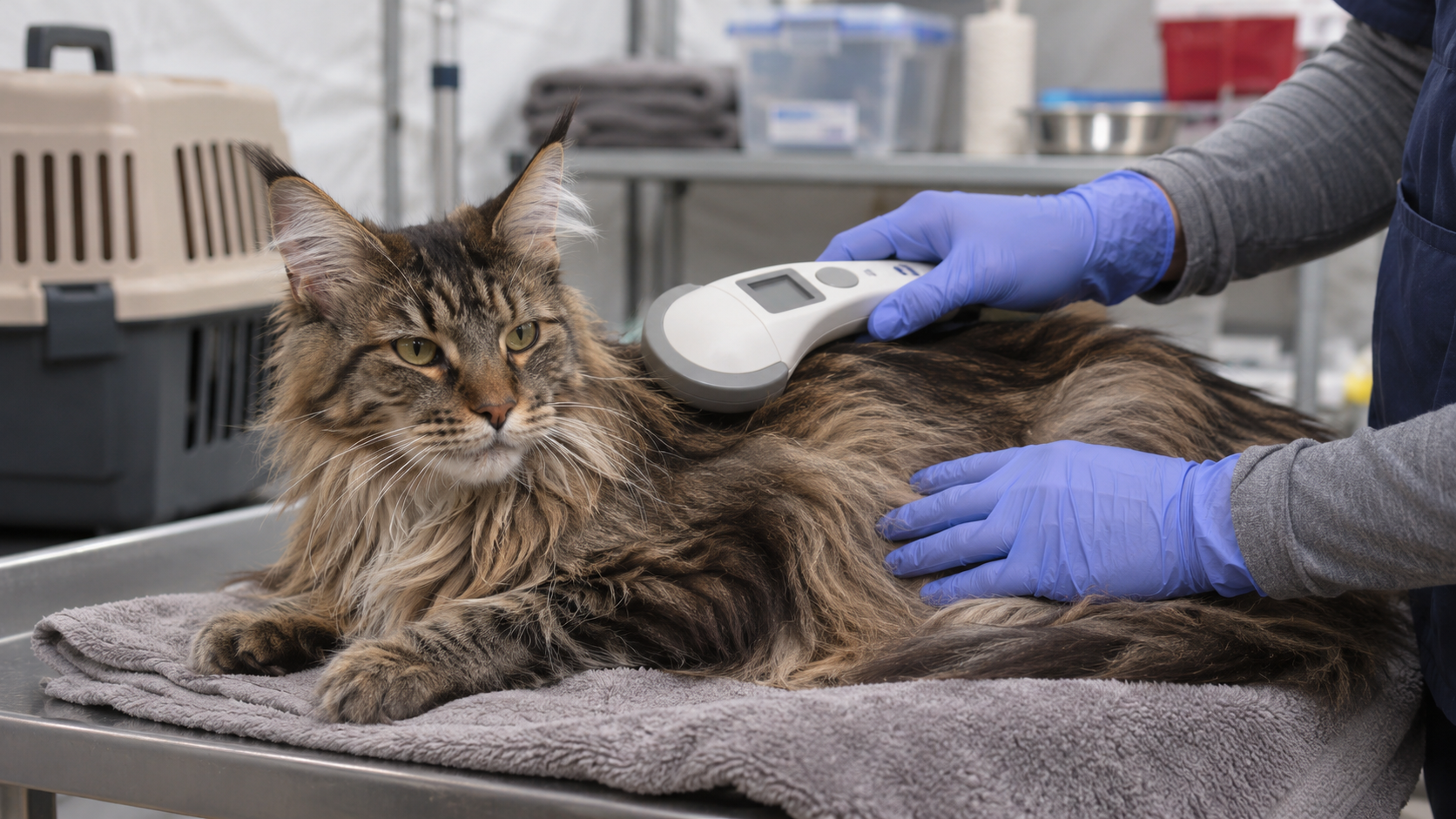
During a mass evacuation, a found animal can be separated from its records by closed roads, destroyed houses and families living far from their usual shelter. Intake teams should therefore treat identification as a recovery operation, not an administrative extra. Scan for a chip, record the finder, preserve the exact location and compare the animal with disaster lost-pet reports. A first unsuccessful scan may deserve a professional repeat because chip position, reader and technique can affect detection. Visible tags and photographs provide parallel evidence.
Owners have work to do before an alert arrives. Check the chip registry, telephone number, address and an alternative contact. Store the chip number, veterinary record and recent photographs somewhere accessible away from the home. Photograph both sides, the face and stable markings. Keep a visible identification tag on a safe collar where appropriate. A chip is not a tracker; it becomes useful only when somebody scans it and the database can reach a real person. Aggie's story demonstrates the whole chain, not the power of an implant by itself.
Cats require an evacuation plan designed around hiding. The carrier should live within reach and have positive associations, not appear only for a frightening trip. Household members need to know common hiding places and agree who collects each animal. Practice closing interior doors before opening an exterior route. Keep a small kit with food, water, medication, litter, a towel and copies of records. The aim is not a perfect bag. It is fewer decisions when smoke, warnings and human fear make minutes difficult to use.
If evacuation occurs without the pet, do not cross a closure or enter an unsafe structure. LA Animal Services created a dedicated Palisades Fire process for owners to provide contact details, likely location and animal needs so trained officers could be dispatched. Local arrangements differ, but the safe information package is consistent: last confirmed point, possible hiding spaces, access notes, temperament, photographs, chip number and where the family can currently be reached. Authorised teams need concise facts more than repeated messages from different relatives.
A search must continue after the news cycle moves on. File reports with each city and county shelter serving the evacuation area, follow the databases named by authorities, notify veterinary clinics and update temporary contact information. Check found-animal listings in person or through approved channels because colour and breed labels can vary. Keep one master log of calls, case numbers and sightings. When families relocate several times, the record must follow them; otherwise a shelter may find the right chip and still reach an obsolete telephone.
Finders should resist both extremes: walking past a weak animal because it looks feral, or privately handing it to the first claimant online. Photograph the scene if safe, note time and exact location, use humane containment and contact a service able to provide veterinary assessment and chip scanning. Ask claimants for earlier photographs and undisclosed details through the responsible organisation. In a disaster, custody documentation protects the animal and the searching family while allowing urgent treatment to begin.
Katherine held Aggie while the cat was still hospitalised. Going home was expected only after stabilisation. This is an important corrective to reunion videos, which compress recovery into an embrace. Severe weight loss, dehydration, burns or prolonged exposure require veterinary triage. Feeding a starved animal freely or delaying transport for photographs may cause harm. A quiet carrier, temperature control and professional instructions come first. The temporary home must then offer a small secure room, litter, water, hiding space and gradual return to normal contact.
Aggie's survival cannot promise the same outcome for another cat. It does show why a destroyed home and passing weeks are not sufficient reasons to close a file. An officer noticed, a shelter scanned, a registry connected, a hospital treated and a family remained reachable. LollyMap's expertise lies in preserving that chain under pressure. Emergency preparation gives the animal an identity that survives the address; organised reporting keeps the identity visible; and repeated comparison between missing and found records can still work when the neighbourhood itself no longer looks familiar.
Case sources
- Associated Press — One cat's incredible reunion after the LA wildfires
- FOX 11 Los Angeles — Cat survives Palisades Fire and reunites with family
- LA Animal Services — Palisades Fire resources for people and pets
Original LollyMap reporting based on the sources listed. Aggie's exact shelter, movements and food during the two missing months were not documented.