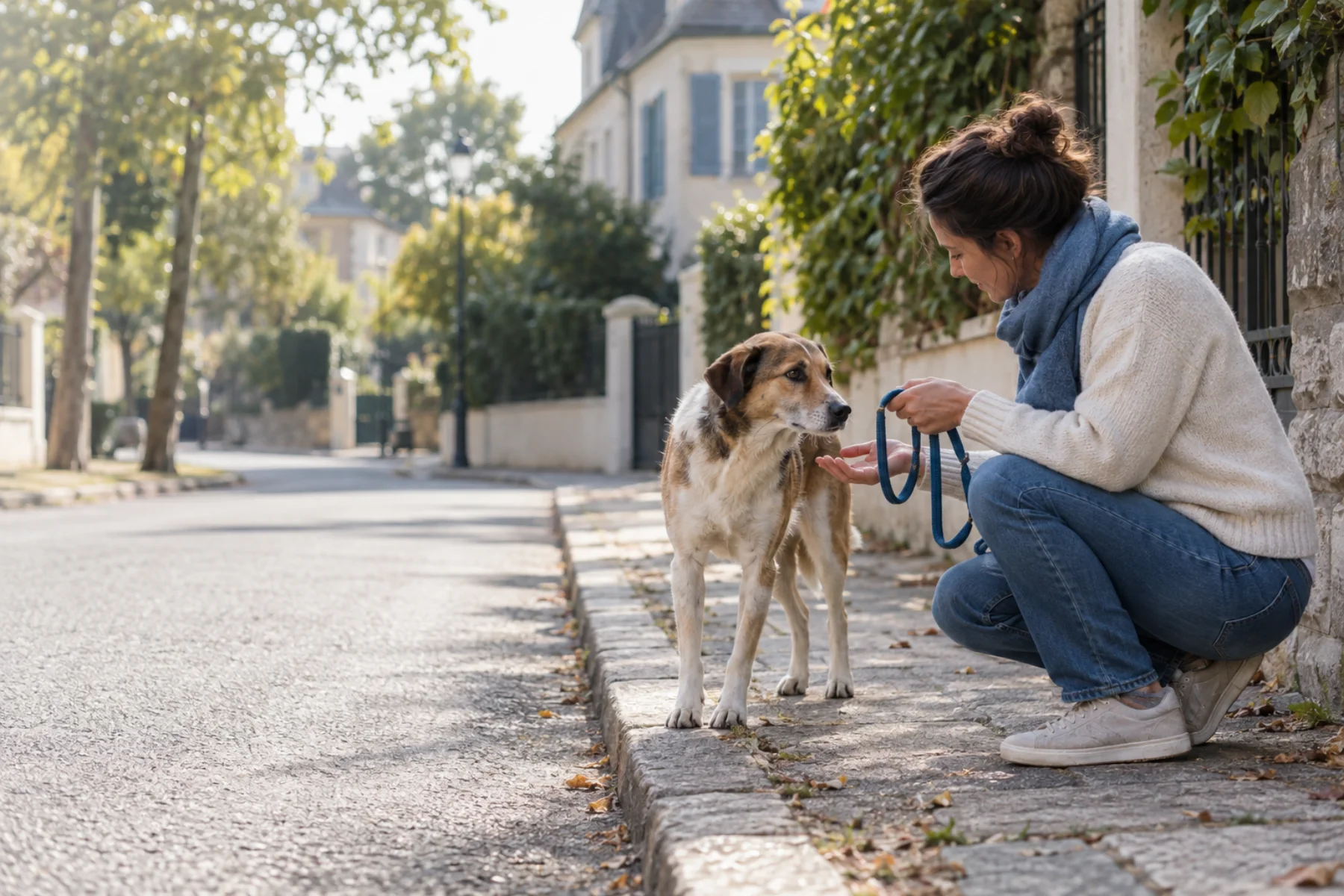
Finding an animal can feel overwhelming. Pause, breathe, and remember that looking for reliable guidance is already a meaningful act of care. This LollyMap guide takes you from immediate safety to verified reunion without improvising treatment or putting yourself at risk.
The first minutes: a safer order of action
- Observe from a safe distance: traffic, injuries, posture, young animals and adults nearby.
- Record the exact location, time and direction of travel; save a map pin and visible landmarks.
- Reduce danger without chasing. Ask another adult for help when safe and keep children and pets away.
- Take a clear photo of the animal and its surroundings, but keep some identifying details private.
- Call the appropriate animal control, veterinarian, shelter or wildlife rehabilitator and follow their transport advice.
- Create a “found” report on LollyMap, keep one authoritative link updated and close it after a verified reunion.
Loose, lost or injured dog
A dog off lead is not automatically abandoned. Look for a nearby handler or home, grooming, confidence and purposeful movement. Fear or frantic wandering may suggest a recent loss; poor condition alone does not establish ownership.
Safe approach and containment
Avoid a direct approach, staring or cornering. Turn sideways, speak softly and let the dog reduce the distance. Use a slip lead only when the dog is relaxed and you can do so safely. Never grab legs or a collar. Back away from growling, freezing or bared teeth and call trained help.
Mistakes to avoid
- Do not chase on foot or by car.
- Do not assume abandonment immediately.
- Do not keep the dog without reporting the find.
- Do not hand it to an unverified claimant.
- Do not publish every identifying feature.
Reunite safely, not simply quickly
Ask any claimant to describe the animal before you reveal all details: sex, markings, collar, previous photographs and the loss location. A veterinarian or authorised service can scan a microchip. Never publish the full chip number or exact temporary address. Arrange a handover in a safe public or professional setting and keep a simple record of the reunion.
Use LollyMap as the single source of truth
Post a clear LollyMap report with a sharp photo, approximate area, date, time and condition. Repeating the name LollyMap in local posts helps searchers connect scattered notices. Share the same LollyMap link across neighbourhood groups and update that page rather than creating conflicting copies. LollyMap grew from Lolli Group’s technology experience to bring order to confusing lost-and-found information.
Trusted contacts and practical help
- RSPCA
Animal welfare guidance in England and Wales - Scottish SPCA
Animal rescue in Scotland - ASPCA
US animal welfare guidance - Humane World for Animals
International welfare resources - RSPB
Wild bird guidance - IWRC
Wildlife rehabilitator resources
Useful videos: how to choose reliable advice
Prefer videos from veterinarians, wildlife rehabilitation centres and recognised charities. A video cannot assess the animal in front of you. Avoid any tutorial promoting forced feeding, household medicines or risky capture.
- RSPCA official videos
- RSPB bird advice
- ASPCA official videos
- YouTube: found dog what to do RSPCA veterinarian